I performed some minor changes to the playfield today. The original Nugent machines came with solid red lane guides at the top of the playfield. They look OK, but are a little dull. When looking around at various pinball spare parts shops I spied a few transparent red guides that would look awesome, so I purchased them. Replacing them is as simple as removing two screws.

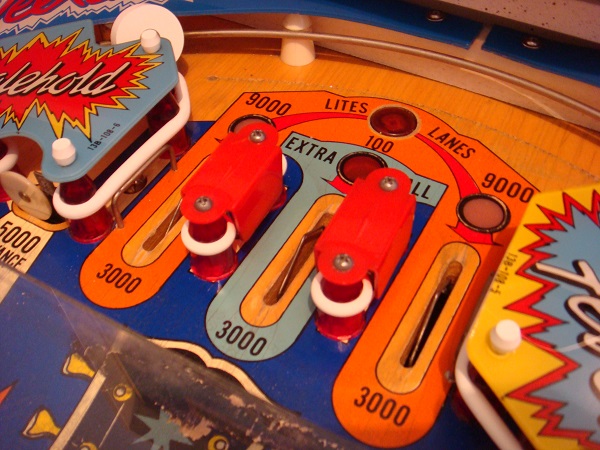
This is how the original red guards look:
Nugent playfield lane guides
Continue Reading

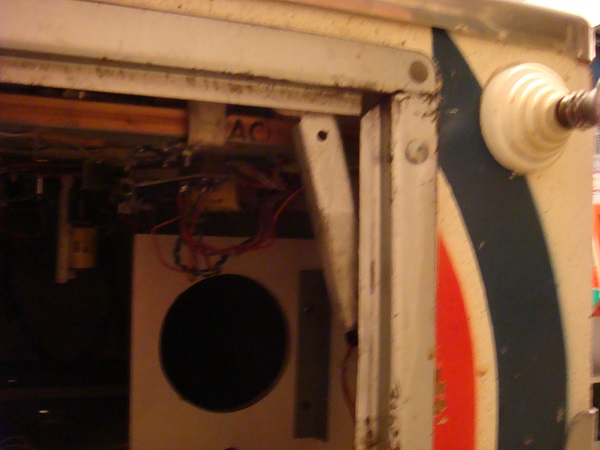
One of the first things I wanted to when I got the machine was have a look at the game board and power wiring. Most of this lives behind the backglass. There is a lock on the top right of the machine. Sadly this lock came with no key, and I could not locate one inside the machine. Looking at the lock, it appeared that the previous owner had also misplaced the keys as the lock itself looked like it had been attacked with a screwdriver. Using a screwdriver myself, I undid the lock.

With the lock undone, I could then slide the actual backglass up and out to reveal the bulbs, score displays and door containing the components.

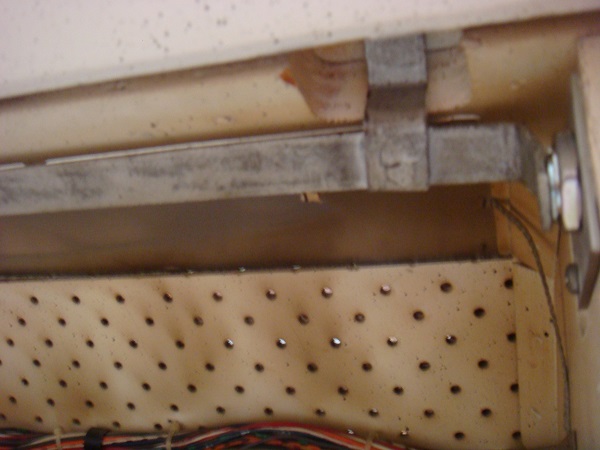
The lock itself controls a long metal rail that runs across the top of the backglass. With the lock engaged, the backglass cannot be moved. With the lock open, it removes the metal rail, allowing the backglass to be slid up and out.

backglass lock
Continue Reading

After playing my Nugent a lot over the last two weeks, I decided it was time to make some improvements to the gameplay – this means giving some attention to the playfield. For now, I’m keeping it simple but in the long run I plan to use some Novus 2 and wax along with leveling the inserts to really improvement playfield.

First step was to get access to the playfield. To do this, I need to remove the lockdown bar which side across the end of the pinball table. Just inside the coin door – at the top right – is a handle. Pulling this to the left unlocks the lockdown bar.

Stern lockdown bar
Continue Reading

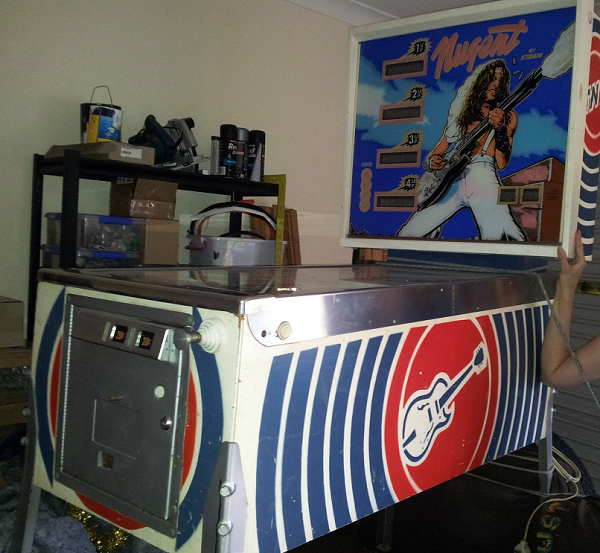
I received an early Christmas gift this year – completely unexpected, and it blew me away. My first pinball machine – a 1978 Stern “Nugent”. I was very happy to say the least. While the machine is in good condition, it is 35 years old so in need of some attention. For the last 3 years I have had my head inside arcade machines, so it will be refreshing to be involved with the servicing and restoring of a pinball machine. I still have Pole Position 2 to complete, but for now – i’ll be giving some attention to my new toy 🙂

Stern Nugent 1978
Continue Reading

Something I’ve wanted to get around to for awhile was giving some attention to the pedal assembly. I mentioned in an earlier post some issues I saw with it, and figured I would make the time to deal with it now while waiting for artwork and t-moulding to arrive.

When I tested the machine out before buying it, I did some light testing of the pedals (among other things). Both pressed OK, although could use some servicing. Trying them out in game, the accelerator worked fine as I could race around the track. The brake pedal seemed to be OK too as my car would slow down, although not as quickly as I expected. The machine was being sold as 100% working, so I left it at that, with the knowledge I’d need to give the pedals a clean and some grease/oil..

After getting it home and starting work on it, I eventually got my head into the back of the cockpit and began to inspect the machine much more closely. I decide to put the game into test mode (there is a handy switch for this inside the rear of the cockpit) and test out all the controls to see what they showed on the test mode.

The brake pedal gave no response.

Strange I thought – the car slows down when I shift my foot onto the brake and slows down when pressed. I stuck my head into the back of the cockpit once more to have a look at the rear of the pedal assembly, specifically the brake. It would appear the pot that connects to the brake pedal is no longer attached and had not been attached for some time. What I thought had been the brake slowing the car down was nothing more than me taking my foot off the accelerator (which explains the unresponsive feel of the slow down).

As you can see in the image below, the pot is not attached to the brake pedal.
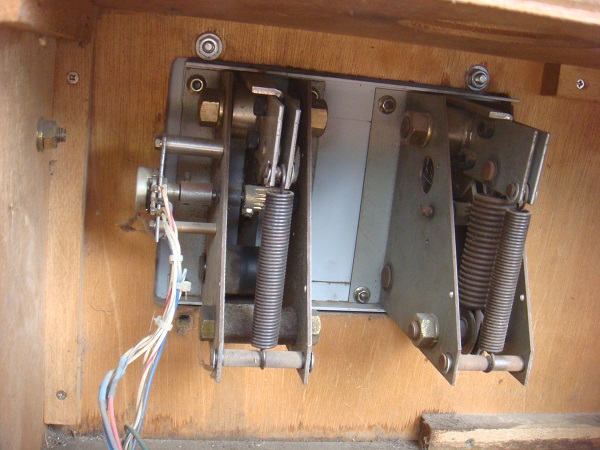
Pedal Assembly Start
Continue Reading